Coral reefs making a comeback, with five years of record growth recorded in the Northern Great Barrier Reef
08/14/2026 / By Lance D Johnson
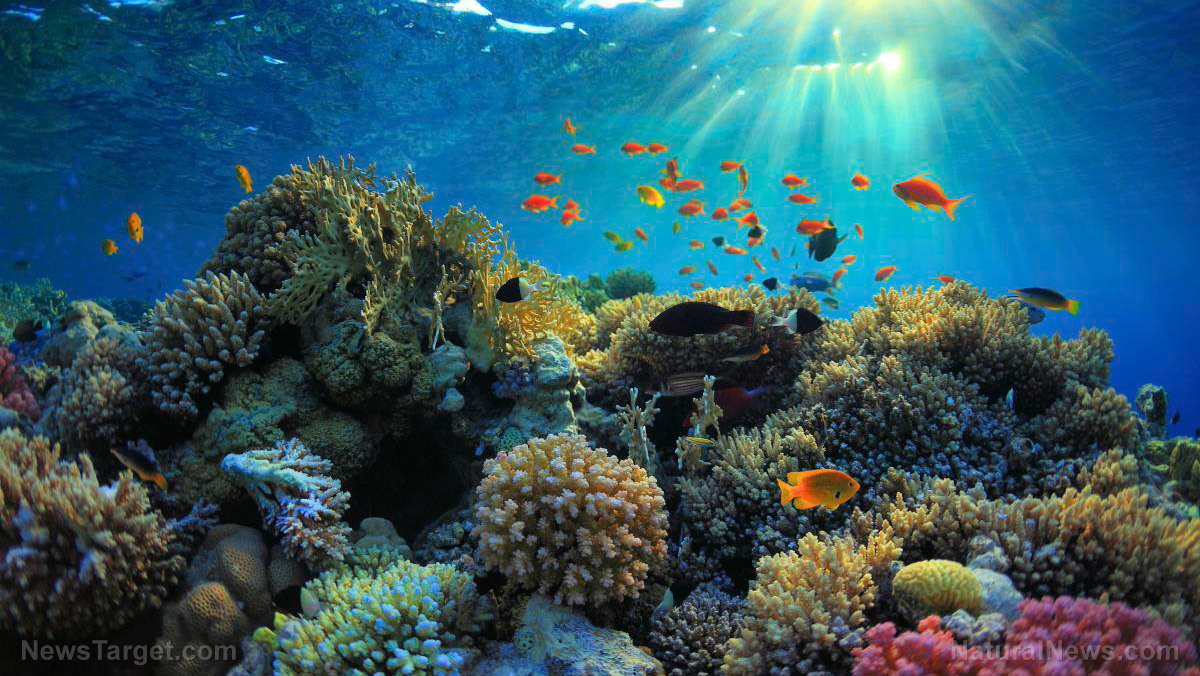
For decades, climate alarmists have used the Great Barrier Reef as their poster child for ecological collapse, a visual shorthand for a planet in peril. From George Monbiot’s 1999 declaration of “imminent total destruction” to a steady drumbeat of headlines about “tipping points” and “unprecedented” bleaching, the narrative has been one of inevitable decay. Yet, the physical evidence on the sea floor tells a completely different story. The reef is not dying; it is adapting, making a comeback. The latest data from the Australian Institute of Marine Science reveals that hard coral cover across the vast marine park has remained stable or increased, with the northern and central regions recording their highest levels in decades. This reality, however, is proving deeply inconvenient for those who have built a career on predicting apocalypse, forcing a reckoning with the difference between observable fact and hysterical fiction.
Key points:
- The Australian Institute of Marine Science’s latest report shows coral cover increasing in the northern and central Great Barrier Reef, exceeding long-term averages.
- Mainstream media have largely ignored this recovery, instead focusing on disputed proxy data and transient bleaching events.
- Natural stressors, including cyclones and crown-of-thorns starfish outbreaks, are often ignored by alarmists who seek to attribute all reef changes solely to climate change.
- Despite summer temperatures above average, surveys recorded only low levels of bleaching, demonstrating the ecosystem’s robust adaptability.
Hard coral cover surges 30% in the northern region of the Great Barrier Reef
The new report for the 2025–26 season offers a stark rebuke to the narrative of collapse. In the northern region, hard coral cover surged from 30% to 35.1%, a significant jump that places it well above the 27% long-term average. The central region fared even better relatively, climbing from 28.6% to 31.6%, a figure that dwarfs its historic average of 20%.
Only in the cooler southern waters did the coral remain static, holding at 26.4%, just under its 29.3% average. This is not the portrait of an ecosystem on life support. It is the signature of a resilient, dynamic natural system that has weathered heat, storms, and predators for millennia, just as it weathered the alarmist predictions of the last thirty years. Dr. Peter Ridd, a noted reef scientist, has compiled the data into a coherent graphic that demonstrates a clear upward tick in overall growth, resuming a trajectory of health that has now persisted for five consecutive years.
Media fuels hysteria, while nature becomes resilient
The media’s cognitive dissonance on this issue is staggering. During the 2016 and 2017 bleaching events, the global press was saturated with images of white coral skeletons. What was rarely mentioned was the concurrent severe outbreak of crown-of-thorns starfish, a natural predator that can devastate coral populations far faster than warm water. The confluence of these factors was repeatedly distilled into a simple, false equation: heat equals death equals human guilt. This selective focus distorts the scientific record and ignores the complexity of marine biology.
Corals are not fragile glass sculptures; they are ancient organisms that have adapted to fluctuating ocean conditions for hundreds of millions of years. As biologist Helen McGregor tacitly admitted, they have “survived a lot of change over geological time,” a statement of fact that undermines the crisis framing she otherwise supports.
The alarmists’ reliance on the term “marine heatwave” is a classic example of using emotionally charged language to replace scientific accuracy. It is impossible to directly attribute a specific micro-variation in ocean temperature to human carbon emissions, yet activists speak with absolute certainty. They ignore the fact that tropical corals thrive in waters ranging from 24°C to 32°C and that growth is often more vigorous near the equator.
The 2025–26 summer saw sea surface temperatures 0.7°C to 1.1°C above average, yet the surveys found minimal bleaching. This directly contradicts the narrative that any slight warming is catastrophic. The GBR has experienced bleaching events in 1998, 2002, 2016, 2017, 2020, 2022, and 2024, and still, it persists. As Ridd pointed out, if the catastrophic reports were true, there should be no coral left at all. Instead, we see record growth, a testament to nature’s resilience that the doom merchants refuse to acknowledge.
Sources include:
Submit a correction >>
Tagged Under:
AIMS report, Australian science, climate realism, coral bleaching, coral cover, coral growth, coral recovery, Ecology, environment, Great Barrier Reef, marine science, media bias, natural adaptation, ocean health, Peter Ridd, real investigations, reef resilience, truth
This article may contain statements that reflect the opinion of the author
RECENT NEWS & ARTICLES