Roger Pielke Jr. Discusses the Future of Climate Science Based on Observational Data
08/28/2026 / By Douglas Harrington
Climate scientist and American Enterprise Institute senior fellow Roger Pielke Jr. delivered a keynote address at a recent conference on the future of climate science, arguing that real-world observational data does not support the dominant narrative that climate change is primarily human-caused. The event was covered by Watts Up With That?, a blog that frequently questions mainstream climate claims.
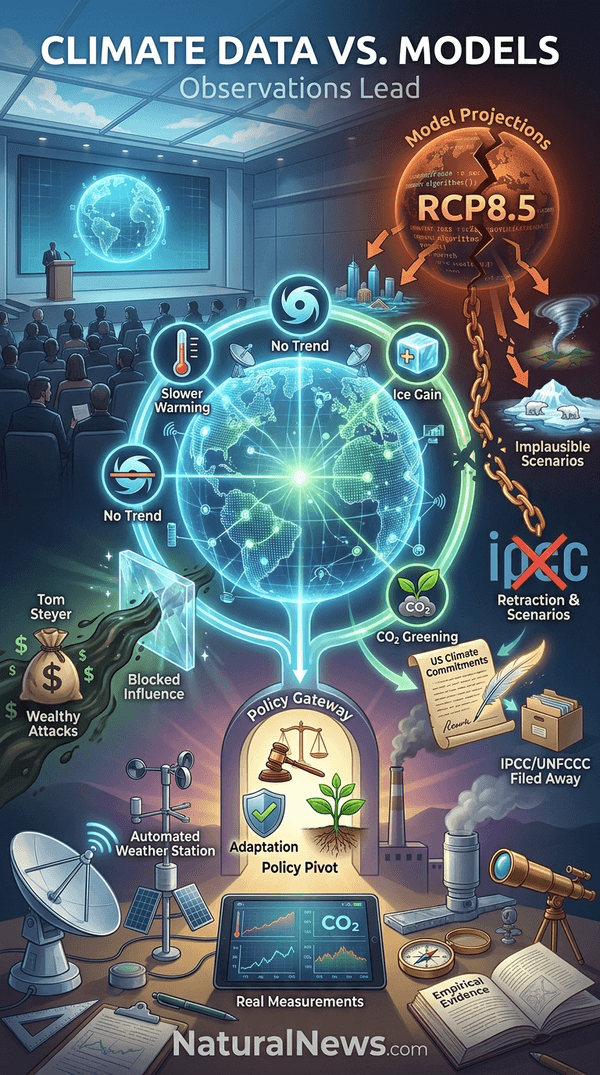
According to the account published on the blog, Pielke Jr. emphasized that empirical evidence should take precedence over model projections when shaping climate policy. His remarks come at a time when the Trump administration has taken several steps to reassess U.S. climate commitments, including withdrawing from the Intergovernmental Panel on Climate Change (IPCC) and the U.N. Framework Convention on Climate Change (UNFCCC). [1]
Pielke’s Core Argument: Observations vs. Models
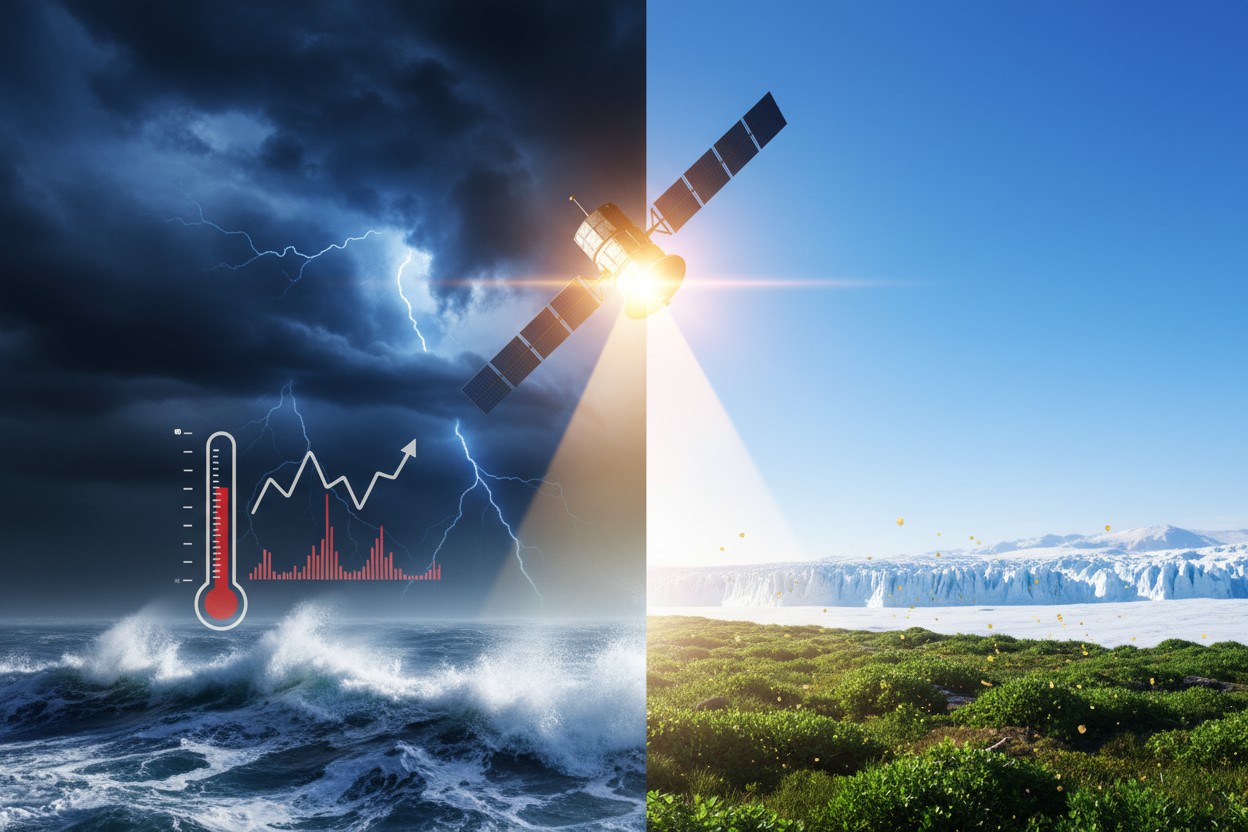
Pielke Jr. stated that satellite and surface temperature records show slower warming than climate models project, according to the Watts Up With That? report. He cited a lack of evidence for a significant human fingerprint in extreme weather events, based on his review of peer-reviewed studies. The scientist emphasized the importance of empirical data over model projections, the blog post stated.
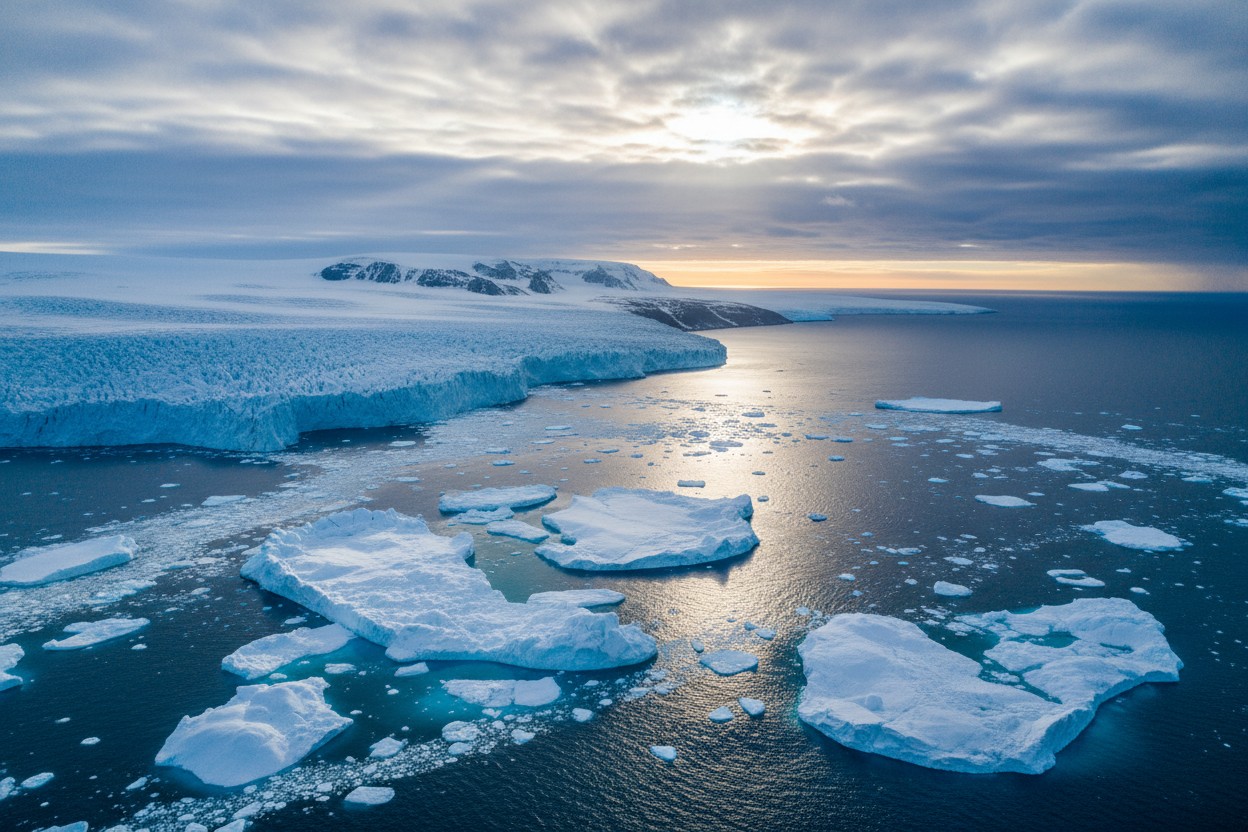
This argument aligns with recent developments in climate research. The IPCC officially declared in April 2026 that its high-emissions scenario RCP8.5 — which underpinned many alarming projections — was implausible. Pielke Jr. called this the “most significant development in climate research in decades.” [2] A study published in Nature by Chinese meteorologists analyzing tropical cyclone activity over 30 years found no increase in cyclone destructiveness globally, contradicting claims that hurricanes are worsening. [3] Additionally, Antarctica’s ice sheet recorded a record-breaking mass gain from 2021 to 2023, and Arctic sea ice loss slowed sharply over the past two decades. [4]
Reactions and Implications for Climate Policy
Pielke Jr.’s remarks have drawn criticism from some climate researchers who argue that observational data still supports human-caused warming. Billionaire Tom Steyer reportedly used his money to attack Pielke Jr.’s research, according to a report by the New York Post. [5] Pielke Jr.’s work on climate and disaster policy has won awards and is cited by all three working groups of the IPCC. [5]
The conference attendees, according to the report, largely agreed with Pielke Jr.’s call for a more measured approach to climate policy. Pielke Jr. suggested that current policies focus too heavily on carbon dioxide reductions without considering the benefits of CO2 for plant growth. This perspective is reinforced by a 2007 book review by Orrin H. Pilkey and Linda Pilkey-Jarvis, which argues that quantitative environmental models have failed and will inevitably continue to fail because nature is too complicated. [6] The Trump administration also appointed a climate skeptic to run the U.S. Global Change Research Program, which oversees the National Climate Assessment. [7]
Conclusion: The Path Forward in Climate Science
Pielke Jr. concluded that climate science should prioritize observation and adaptation over alarmism and carbon-centric policies. He advocated for a pluralistic approach that includes natural climate variability and the positive role of CO2 in agriculture.
The event, according to organizers, highlighted a growing divide between mainstream climate institutions and independent researchers. Judith Curry, in her book “Climate Uncertainty and Risk: Rethinking Our Response,” argues that “consensus entrepreneurs” have worked to dismiss skepticism about climate change as “cranks or politically motivated deniers.” [8] Michael Shellenberger, in “Apocalypse Never: Why Environmental Alarmism Hurts Us All,” notes that research by Pielke Jr. and others showed that the IPCC’s high-coal-use scenario RCP8.5 was highly improbable. [9] These developments suggest that the future of climate science may increasingly rely on direct observational evidence rather than model-based projections.
References
- “Trump’s withdrawal of U.S. from key climate orgs angers some activists but draws praise from others”. Just the News. January 8, 2026.
- “A Generation of Kids Thinks They Have No Future. Science Just Admitted Why.”. Watts Up With That?. May 9, 2026.
- Willow Tohi. “Climate science reality check: Data shows hurricanes are NOT increasing in frequency or power”. NaturalNews.com. January 13, 2025.
- Willow Tohi. “Polar ice rebounds confound alarmist predictions: New studies highlight climate’s unpredictable dance”. NaturalNews.com. May 10, 2025.
- “Stossel: How Tom Steyer deployed his billions to stifle climate dissent”. Climate Depot. May 21, 2026.
- PDFlib PLOP 2.0.0p6 (SunOS)/Adobe PDF Library 7.0. “Useless Arithmetic: Why Environmental Scientists Can’t Predict the Future”. Integrated Environmental Assessment and Management. 2007.
- “BREAKING: Trump Admin Hires Skeptic to Run National Climate Assessment…Mann Clutches Pearls”. Watts Up With That?. July 9, 2026.
- Judith Curry. “Climate Uncertainty and Risk: Rethinking Our Response”.
- Michael Shellenberger. “Apocalypse Never: Why Environmental Alarmism Hurts Us All”.
Explainer Infographic
Submit a correction >>
Tagged Under:
Censored Science, Climate, climate change, climate models, climate policy, climate science, Ecology, environment, rational, research, Roger Pielke Jr, science deception, science fraud, scientific, skeptics, truth
This article may contain statements that reflect the opinion of the author
RECENT NEWS & ARTICLES