Wind mill farms are a green energy scam, harming ecosystems and exploiting resources
10/29/2026 / By Lance D Johnson
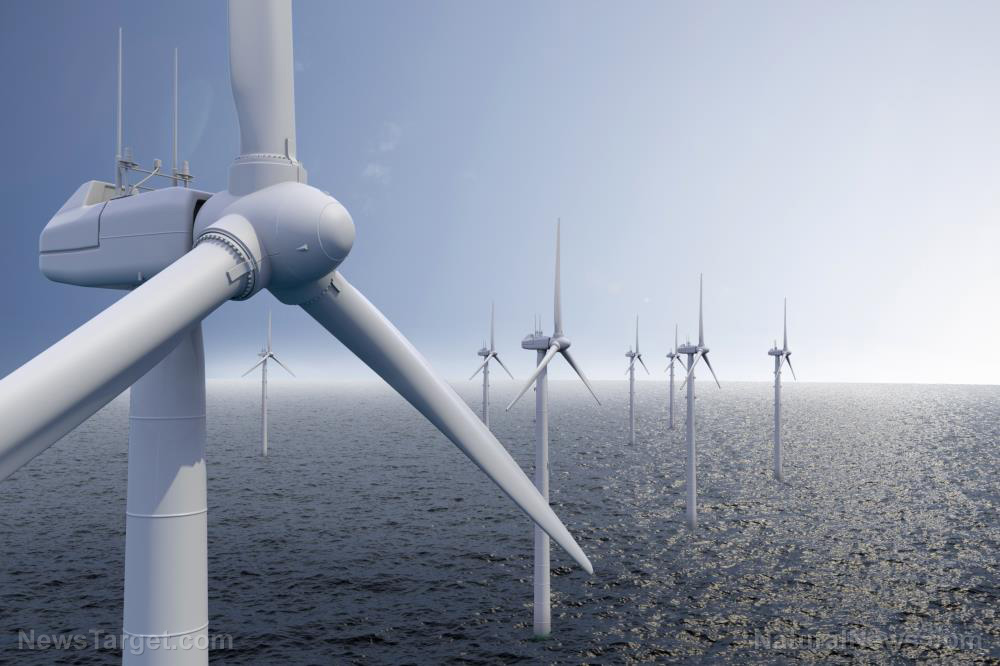
The wind energy boom, hailed as a climate salvation, is a fiscal AND environmental quagmire, harming ecosystems and exploiting resources. British consumers alone have poured £274 billion into renewables since 2005, a figure that could surpass defense spending by 2030. For every £1 electricity users would pay without subsidies, they now shell out £3.90, according to a 2025 analysis by Professor Gordon Hughes and Dr. Lee Moroney. These costs ripple beyond households, hiking prices for goods and services as industries absorb inflated energy bills. The UK’s renewable push, backed by green billionaires and climate alarmists, masks a reality: wind energy is not a miracle but a money pit, with no end in sight.
It’s investors, people of the likes of Mike Bloomberg, Jeremy Grantham, and Eric Schmidt, are not climate saviors. Bloomberg’s $500 million annual climate advocacy, Grantham’s funding of UK climate institutes, and Schmidt’s Climate Central have weaponized fear to push a Net Zero climate change agenda, and to what end? Media outlets like the Mirror and Wiltshire Times amplify exaggerated flood warnings, capitalizing on weather events, while the C40 group, backed by billionaires, coordinates global climate policies promising a better planet. But these elites merely profit from the crisis they invent, ensuring public money fuels their green empire, lying their way to the bank.
Key points:
- Wind turbine blades, non-recyclable and lasting decades, are piling up in landfills, with 8,000 U.S. blades expected to decommissioned annually by 2025.
- British consumers have paid £274 billion in subsidies for renewables since 2005, with costs projected to rival defense spending by 2030.
- Rare earth mining for wind turbines produces radioactive waste and toxic pollution, often exported to countries with lax environmental laws.
- Wind farms kill thousands of bats and birds annually, with industry curtailment measures often ignored to maximize energy sales.
- Billionaires like Mike Bloomberg and Jeremy Grantham fund climate alarmism and renewable subsidies, distorting public perception of energy costs.
Windmills crowding landfills
In Casper, Wyoming, a municipal landfill has become a graveyard for 870 decommissioned wind turbine blades—each as long as a Boeing 747 wing. Fiberglass and resin blades, designed to withstand hurricanes, now clog landfills indefinitely, with Veolia North America’s Bob Cappadona bluntly stating they’ll “be there forever.” The U.S. alone faces 8,000 annual blade disposals, while Europe grapples with 3,800. Industry claims of recyclability are hollow; even “next-gen” blades face technical hurdles. The cost? $675,000 per year for Casper to house its blades. Wind energy’s promise of a cleaner planet is buried under fiberglass carcasses, a silent testament to greenwashing.
Windmill farms require rare Earth extractions
Modern turbines are monuments to extraction. A 2-megawatt turbine requires 800 pounds of neodymium and 130 pounds of dysprosium, rare earths mined primarily in China. Mining one ton of these elements generates one ton of radioactive waste, with toxic byproducts poisoning local communities. The U.S. offshore wind ambitions could demand 17,000 tons of neodymium by 2050, yet pollution is outsourced to countries with lax regulations. The industry’s “clean” image is a lie; the earth’s crust is being ripped open to fuel a green mirage.
Death traps for bats and birds
Wind farms are death traps for bats and birds. A 13-year PLOS ONE study tallied 10,291 bat carcasses and countless birds, with bat deaths peaking during migration. Vermont research shows slowing turbines can cut bat fatalities by 60%, but the industry prioritizes profit over preservation. The Department of Energy’s Critical Materials Institute works on alternatives, but the strongest magnets remain reliant on rare earths. Every kilowatt-hour sold comes with a cost to life, a trade-off the industry refuses to acknowledge.
The wind energy transition is a green mirage. It buries landfills with indestructible waste, poisons ecosystems with mining, and robs communities of their land and livelihoods. The climate crisis narrative, bankrolled by billionaires, distracts from the real costs of renewables. Until the public demands an honest ledger—including subsidies, waste, and wildlife toll—the green illusion will persist. The truth is this: wind energy is not a solution. It’s a scam, and the earth is paying the price.
Sources include:
Submit a correction >>
Tagged Under:
bird deaths, climate fraud, corporate control, corporate greed, ecological damage, energy deception, energy sprawl, environmental costs, financial exploitation, green billionaires, industry lobbying, landfill waste, Media Manipulation, rare earths, renewable fraud, subsidies, toxic mining, wildlife impact, wind energy
This article may contain statements that reflect the opinion of the author
RECENT NEWS & ARTICLES